

Developed in 2021, PMI’s VALUE Index, formerly Sustainability Index, consists of a set of key performance indicators (KPIs) designed to link executive compensation to performance across strategic priorities and incentivize progress. Since 2022, the Index is linked to 30 percent of our performance-based long-term equity awards, demonstrating its continued strategic importance.
This linkage reflects our understanding that long-term business success depends fundamentally on performance across multiple dimensions of value creation, not financial capital alone. By tying executive compensation to these outcomes, we ensure leadership accountability for strengthening the very foundations our business requires to operate and grow.
-
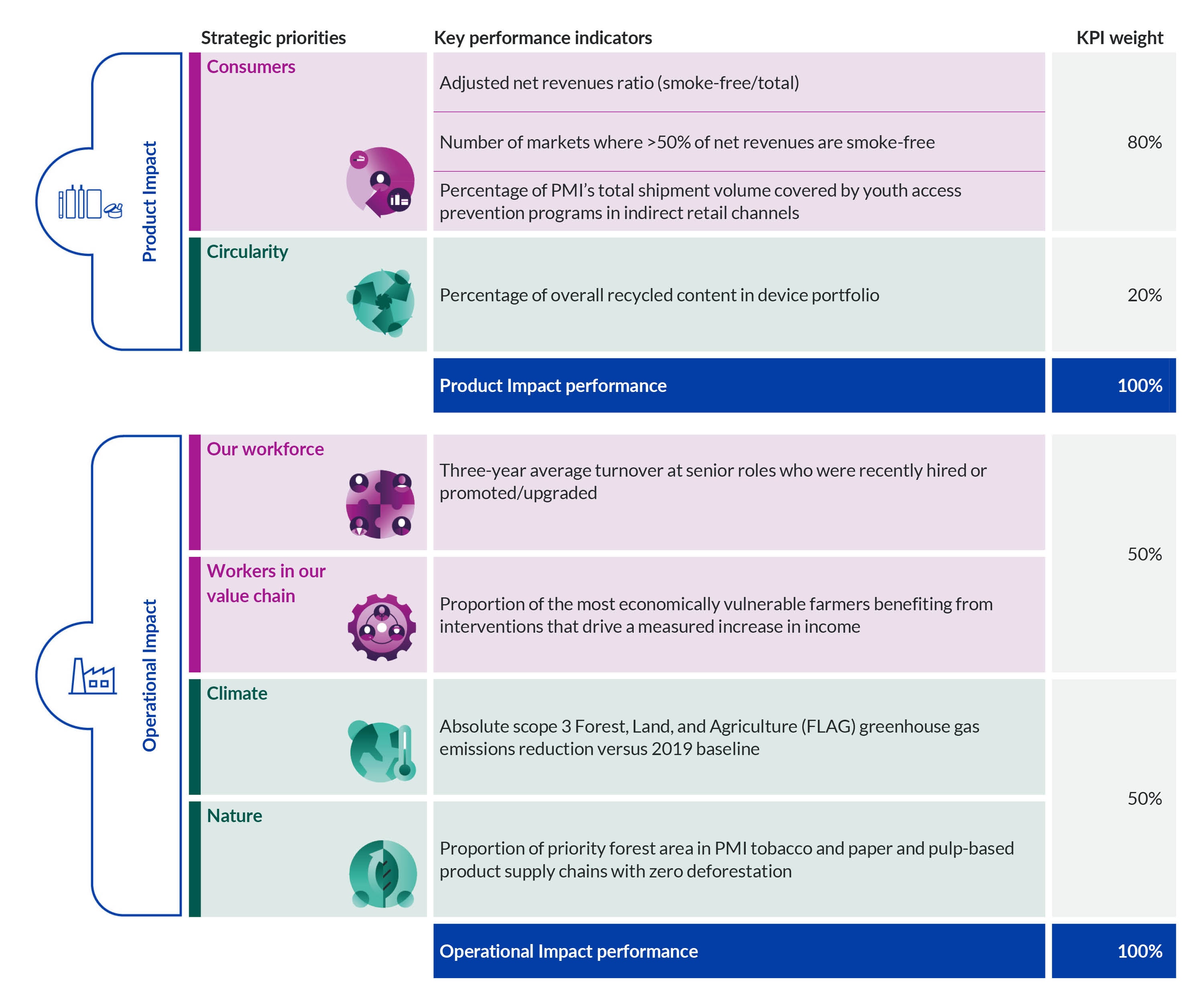
For definitions of the KPIs please refer to PMI's KPI definitions page.
Note: The Sustainability Index reflects KPIs approved by the Compensation and Leadership Development Committee of PMI’s Board of Directors on a yearly basis, and is not intended to reflect, among others, the current forward-looking goals or aspirations of the company.
-
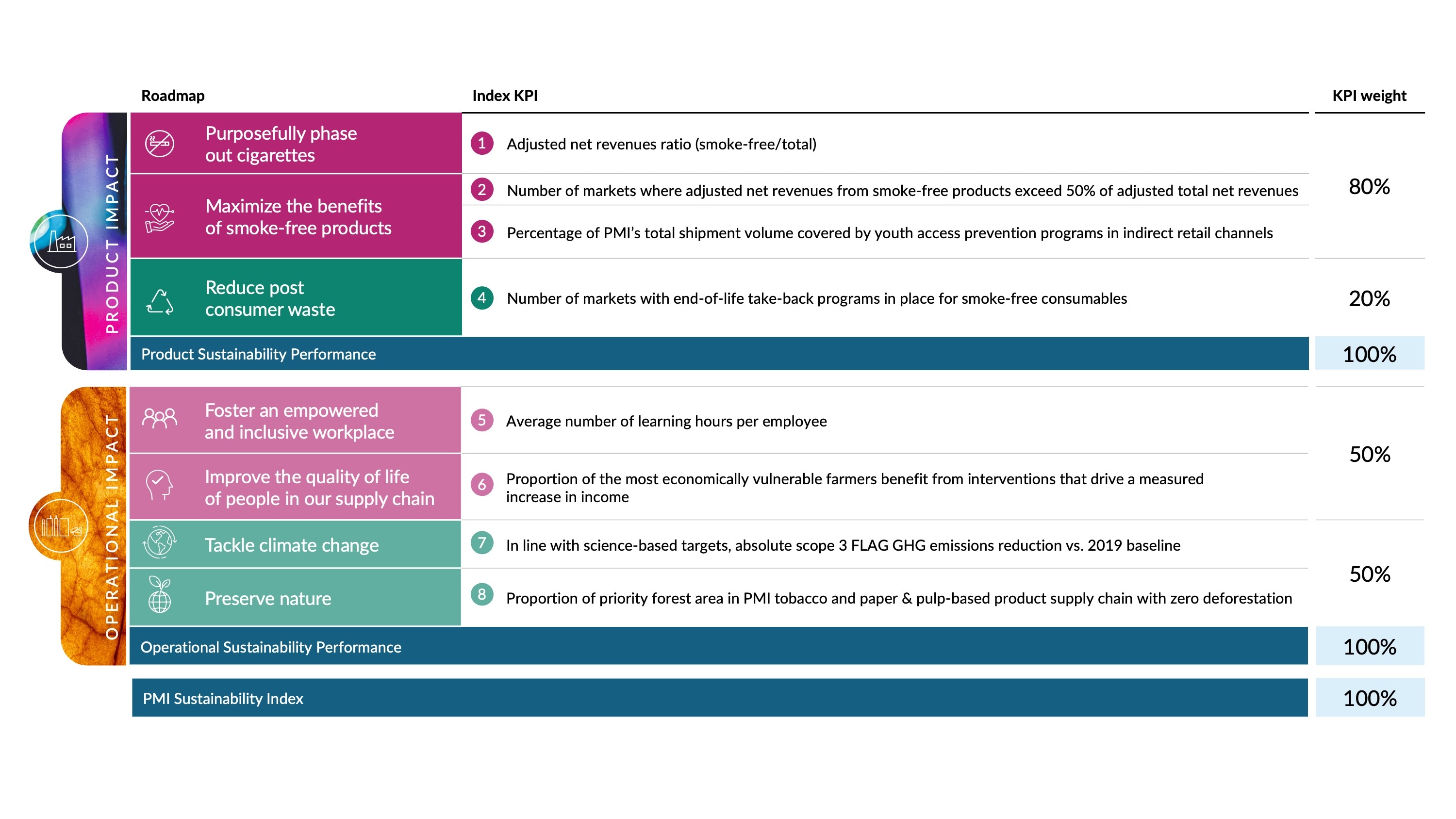
For definitions of the KPIs please refer to PMI's KPI definitions page.
Note: The Sustainability Index reflects KPIs approved by the Compensation and Leadership Development Committee of PMI’s Board of Directors on a yearly basis, and is not intended to reflect, among others, the current forward-looking goals or aspirations of the company.
-
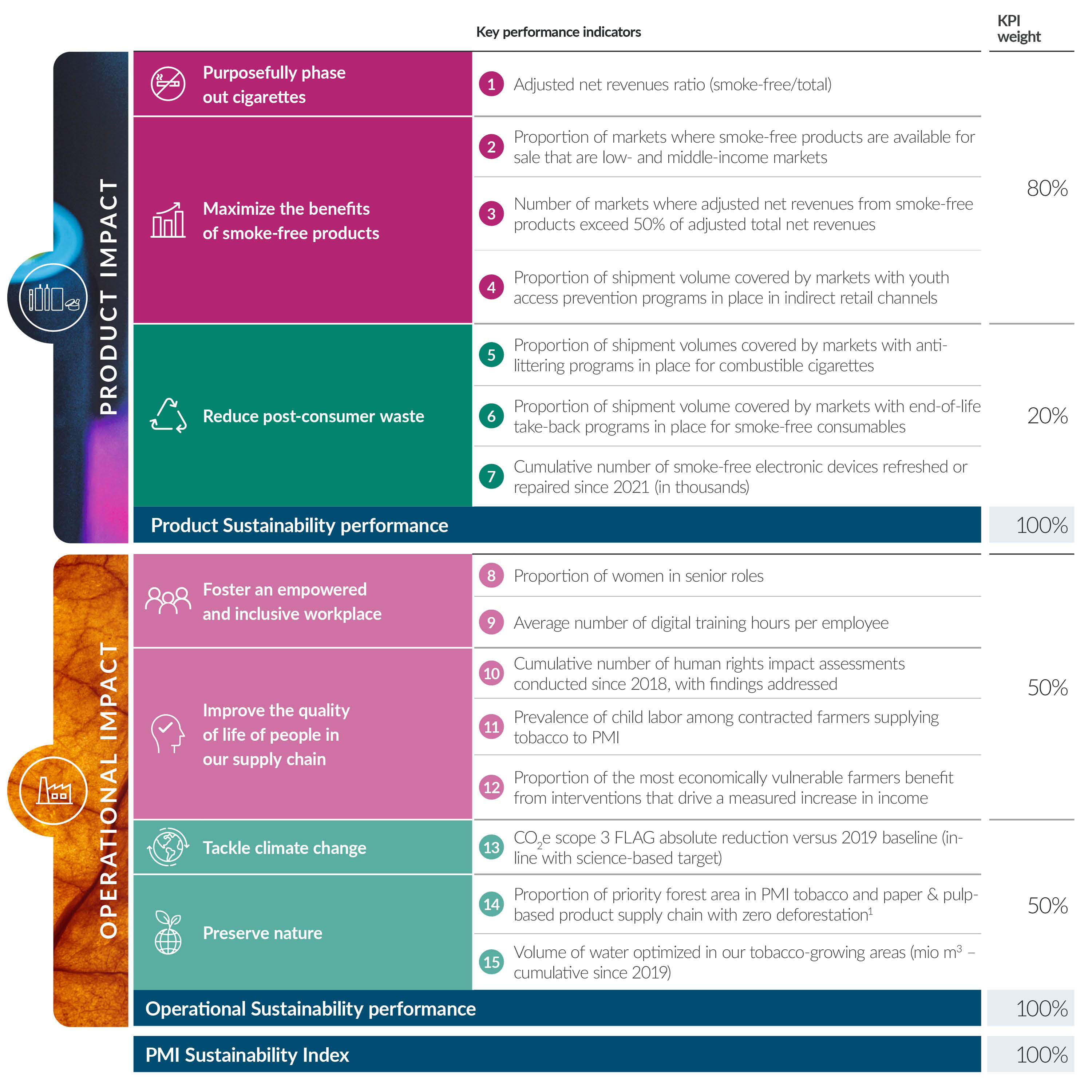
For definitions of the KPIs please refer to PMI's KPI definitions page.
Note: The Sustainability Index reflects KPIs approved by the Compensation and Leadership Development Committee of PMI’s Board of Directors on a yearly basis, and is not intended to reflect, among others, the current forward-looking goals or aspirations of the company.
1Excluding Swedish Match. -
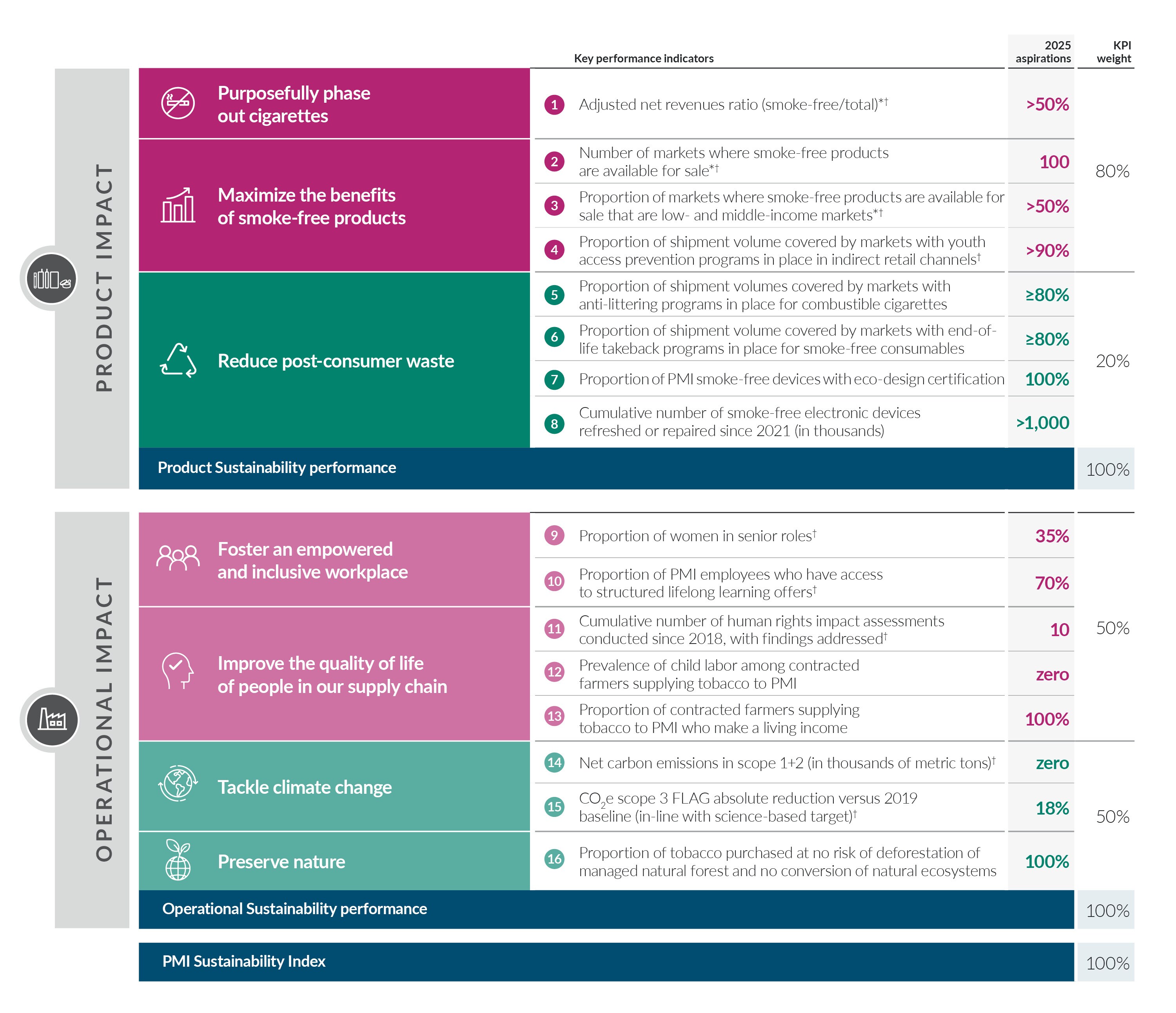
The metrics marked with an asterisk (*) are subject to limited PwC’s Assurance Report. For definitions of the KPIs please refer to the PMI's KPI definitions page. The aspirations for metrics marked with a cross (†) include Swedish Match’s operations in the Sustainability Index 2023–25.
Note: The Sustainability Index reflects KPIs approved by the Compensation and Leadership Development Committee of PMI’s Board of Directors on a yearly basis, and is not intended to reflect, among others, the current forward-looking goals or aspirations of the Company.
-
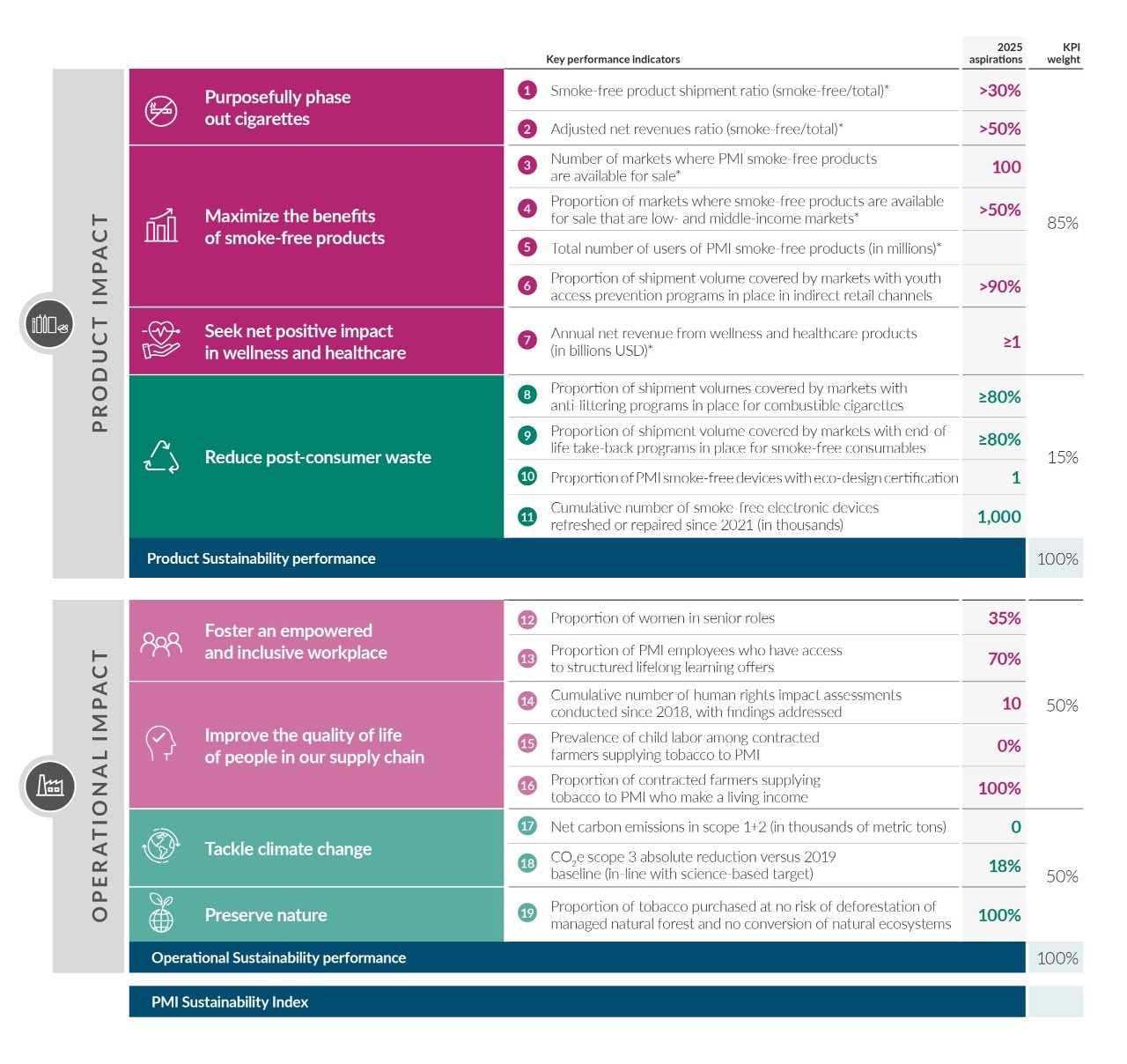
The metrics marked with an asterisk (*) are subject to limited PwC’s Assurance Report. For definitions of the KPIs please refer to the PMI’s Sustainability KPI Protocol 2024 . Note: The Sustainability Index reflects KPIs approved by the Compensation and Leadership Development Committee of PMI’s Board of Directors on a yearly basis, and is not intended to reflect, among others, the current forward-looking goals or aspirations of the Company.
For Index KPI definitions, scope, and calculation methodologies please refer to the Non-financial KPI Hub.
Why VALUE Index?
VALUE stands for Viability, Adaptability, Long-term performance, and Uplifting Excellence. Accordingly, the VALUE Index best demonstrates how our approach to value creation extends beyond financial performance to encompass the full range of resources and relationships on which our success is based. It recognizes that sustainable business results require investing deliberately in multiple forms of capital—human, intellectual, natural, manufactured, and social—alongside financial capital. This name better reflects the intended outcome of our efforts: to create, preserve, and enhance value over the short, medium and long term through risk mitigation, regulatory compliance, operational efficiency, innovation, and purposeful impact. The term VALUE positions these drivers more clearly as fundamental to enterprise strategy rather than compliance or reporting activities, while maintaining full transparency on the underlying performance metrics that matter to our business. In this way, the VALUE Index operationalizes our core conviction: that the sustainability of our business depends on performance across every capital we steward, not just the financial returns we generate.
This online content about our Value Report should be read in conjunction with PMI’s Value Report 2025. This report includes metrics that are subject to uncertainties due to inherent limitations in the nature and methods for data collection and measurement. The precision of different collection and measurement techniques may also vary. This report includes data or information obtained from external sources or third parties. Unless otherwise indicated, the data contained herein cover our operations worldwide for the full calendar year 2025 or reflect the status as of December 31, 2025. Where not specified, data comes from PMI financials, nonfinancials, or estimates.
Unless explicitly stated, the data, information, and aspirations in this report do not incorporate PMI’s Wellness unit, Aspeya. Regarding the Swedish Match acquisition, completed late 2022, unless otherwise indicated, this report includes information pertaining to its sustainability performance. Please also refer to "About this report" on page 3 of the PMI’s Value Report 2025 for more information. Aspirational targets and goals do not constitute financial projections, and achievement of future results is subject to risks, uncertainties and inaccurate assumptions, as outlined in our forward-looking and cautionary statements on page 142. In PMI’s Value Report 2025 and in related communications, the terms “materiality,” “material,” and similar terms are defined in the referenced sustainability standards and are not meant to correspond to the concept of materiality under the U.S. securities laws and/or disclosures required by the U.S. Securities and Exchange Commission.
Read more on sustainability

Our value plan 2030+
Philip Morris International’s Value Plan 2030+ outlines its key ambitions and informs the journey toward its plan for 2030 and beyond.

Our approach to sustainability
5 min readOur approach to sustainability is grounded in the belief that meaningful progress and long-term business value result from a clear vision translated into action through robust processes, collective accountability, and a commitment to transparency.

Business Transformation Metrics
Our Business Transformation Metrics allow stakeholders to transparently assess both the pace and scale of our transformation.